
Explore community resources, including water quality monitoring data, local beach condition reports, educational materials, and programs that help protect local waterways. You'll also find important contact information for reporting environmental concerns and emergencies such as oil spills, harmful algal blooms, fish kills, and other pollution incidents.

Stay informed for summer beach days. If you’re worried about the impacts of the Potomac River sewage spill or looking for information on the safety of your public beaches, the St. Mary's County Health Department monitors local water quality data and posts advisories when levels of enterococcus bacteria exceed state safety standards.
Check the SMCHD Beach Monitoring page for the latest conditions and weekly updates: https://smchd.org/.../water-monitoring.../beach-monitoring/

Following the January 2026 Potomac River sewage spill, we are continuing to monitor water quality testing data and the potential impact on us downriver. We've kept in contact with the Potomac Riverkeeper Network, which has reported they are working with the University of Maryland to include sediment testing along with their water quality monitoring. See their updates here: https://potomacriverkeepernetwork.org/potomac-sewage-spill-data-updates/
The Maryland Department of the Environment (MDE) routinely conducts water quality testing, monitors shellfish waters, and releases public advisories for fish consumption.
For the latest water sampling results following the Potomac River Sewage Spill: https://mde.maryland.gov/programs/water/Compliance/Pages/Potomac-Interceptor-Sewer-Overflow.aspx
To check daily shellfish advisories: https://mde.maryland.gov/programs/marylander/fishandshellfish/Pages/shellfishadvisory.aspx
To check the latest recreational fish consumption advisories, visit the webpage, scroll down to the grey ‘Fish Consumption Advisory Charts by County’ and click the link for St. Mary’s County: https://mde.maryland.gov/programs/Marylander/fishandshellfish/Pages/fishconsumptionadvisory.aspx

If you see an accumulation of dead fish, report it to the Maryland Department of the Environment (MDE) at 800-285-8195 during regular business hours. If seen at night or on weekends, call (866)-633-4686.

If you see bright green surface scum, report the algal bloom to the Department of Natural Resources through their Eyes on the Bay website https://eyesonthebay.dnr.maryland.gov/hab/hab_sightings.cfm or call MDE at (866) 633-4686.

Call the Maryland Department of the Environment at (866)-633-4686 to report events that pose an immediate threat to health or the environment, including:
-Oil or chemical spills
-Pollution accidents
-Sewer overflows
-Radiation incidents
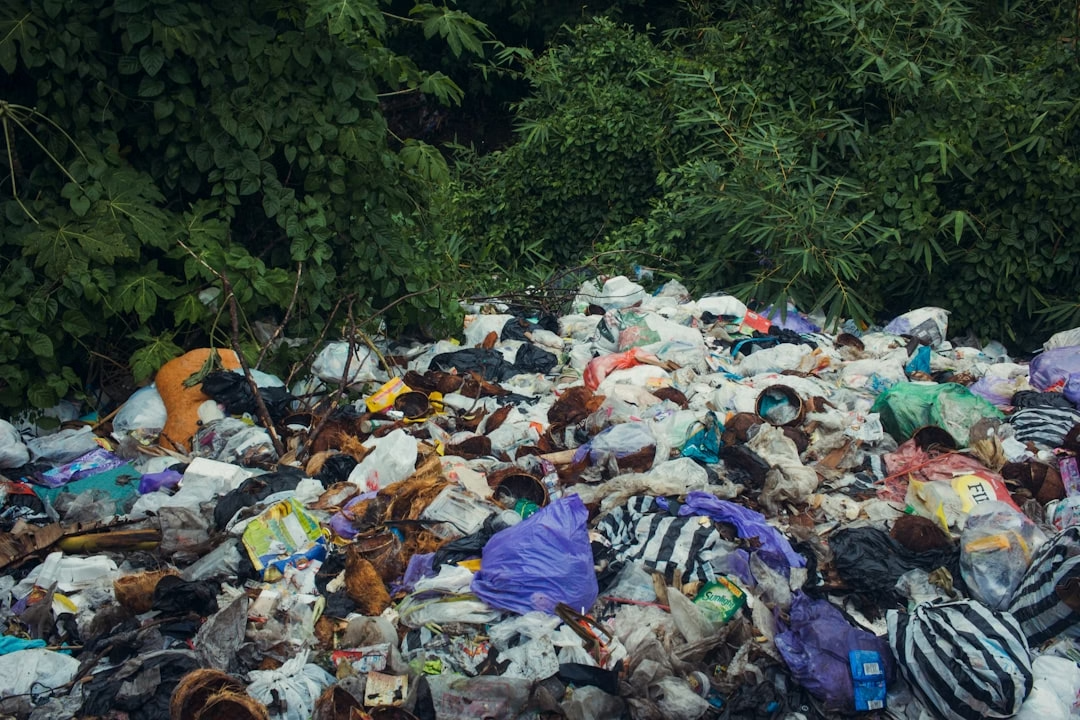
For issues that don't require immediate action such as sediment discharges, potentially unauthorized activities, trash dumping, or something that is not currently active - call 410-537-3510 during business hours, or email [email protected]


If you’re sprucing up your garden, consider planting species that are native to Maryland. Native plants are adapted to our area, which reduce or eliminate the need for pesticides and fertilizers, which means less run-off into our waterways.
Native Plant Species
For a list of certified nurseries and the Maryland native plants they carry, visit Maryland’s Best website: Maryland Native Plants for Consumers - Marylands Best
The Alliance for the Chesapeake Bay webpage for native plants provides results based on sun exposure and soil texture: Native Plant Center - Alliance for the Chesapeake Bay
Remove Invasive Plants
It’s important to remove and avoid the addition of invasive species of plants, which can quickly decrease the biodiversity of an area by choking out the native species, causing damage to the ecosystem and decreasing food sources for wildlife. University of Maryland’s resource on native plants is a great introduction to harmful invasive plants: Introduction to Invasive Plants in Maryland | University of Maryland Extension

Report dolphin sightings in the Chesapeake Bay, PLUS check the interactive map for where they’ve been spotted, how many were seen, and when! Participate in this amazing environmental research project that helps track dolphin movements while educating the public about wildlife. Developed by a team at the University of MD Center for Environmental Science’s Chesapeake Biological Lab to engage the local community and promote the protection of these mystical marine mammals, the data collected will help researchers to better understand how to protect dolphins in our local waterways.
Download the Chesapeake DolphinWatch App for iPhone or Android
Learn more about this project here: https://www.umces.edu/dolphinwatch/
Notify Maryland Department of Natural Resources (DNR) of stranded marine animals & sea turtles (alive or not) by calling:
1-800-628-9944 in Maryland
1-757-385-7575 in Virginia
Or by completing the form: https://survey123.arcgis.com/share/5b27b80ff6ef4ec189a4e4ac49d4282d
For more information on DNR’s response program for stranded animals, visit https://dnr.maryland.gov/fisheries/pages/oxford/stranding.aspx
St. Mary's River Watershed Association, Inc., Post Office Box 94, St. Mary's City, MD 20686 [email protected]