
After the recent Potomac River sewage, we’ve been reaching out to experts and tracking the latest water quality data to try to gauge impacts in our area.
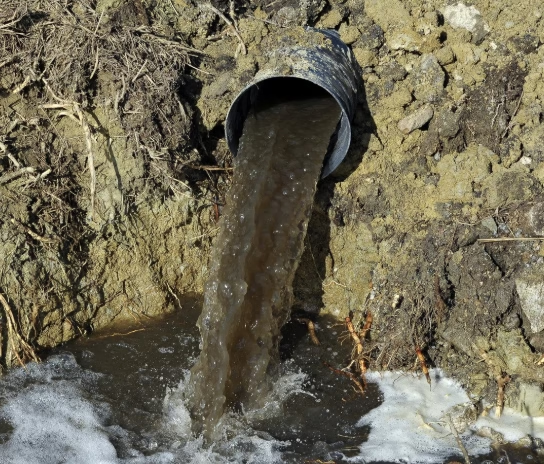
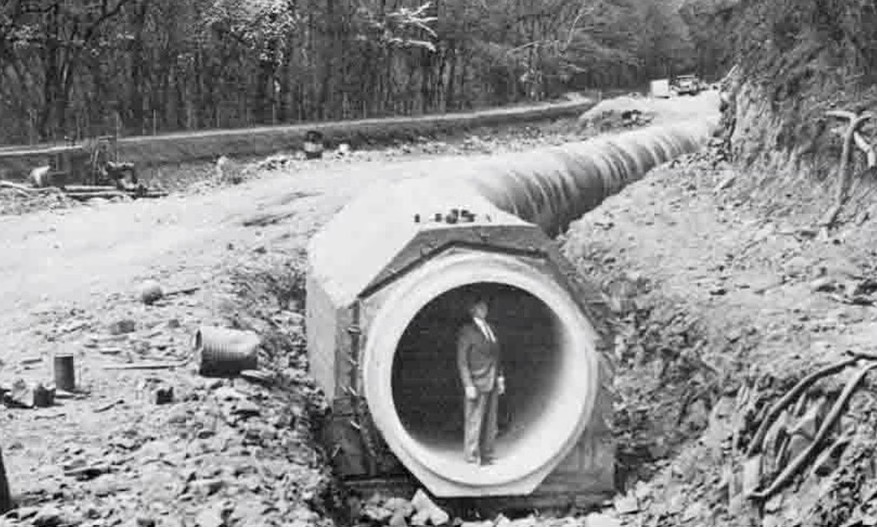
The January 19 pipe collapse resulted in over 250 million gallons of raw sewage spilling into the Potomac River. The aging sanitary sewer system, called the Potomac Interceptor pipeline, is a 54-mile sanitary sewer system built over 60 years ago and carries 60 million gallons of wastewater daily.
This 72-inch in diameter sewer pipeline, operated and maintained by DC Water, provides wastewater service for hundreds of thousands of people near the Dulles Airport. From these neighborhoods, the sewage is routed to the Potomac Pumping Station in Washington, DC and then to the Blue Plains Advanced Wastewater Treatment Plant. The sewage is treated at the Blue Plains Treatment Plant and then released into the Potomac River.
On March 4, we sent a letter to our elected officials and representatives at the Maryland Department of the Environment. We also informed our county commissioners of this request. The letter requested the following items:
- Increased testing of the Potomac River (including the St. Mary’s River) and a publicly available model of the Potomac River that can predict a sewage spill’s path.
- Frequent notices from public agencies about the impact of the spill so that the public is informed.
- Adequate public funding of this critical infrastructure to prevent repeat occurrences of this kind of disaster.
Immediately following the spill, we called Potomac Riverkeeper, Dean Naujoks, to see what we could do to help, and when we should start testing downriver from the spill. He reported that the main setback for gauging the impact and determining testing locations is that there isn’t an accessible model of the Potomac that can predict or track where the sewage is flowing or how long it will take to dissipate. We contacted researchers at the University of Maryland Center for Environmental Sciences, the University of Maryland, and the National Oceanic and Atmospheric Administration, and realized no one had an adequate model.
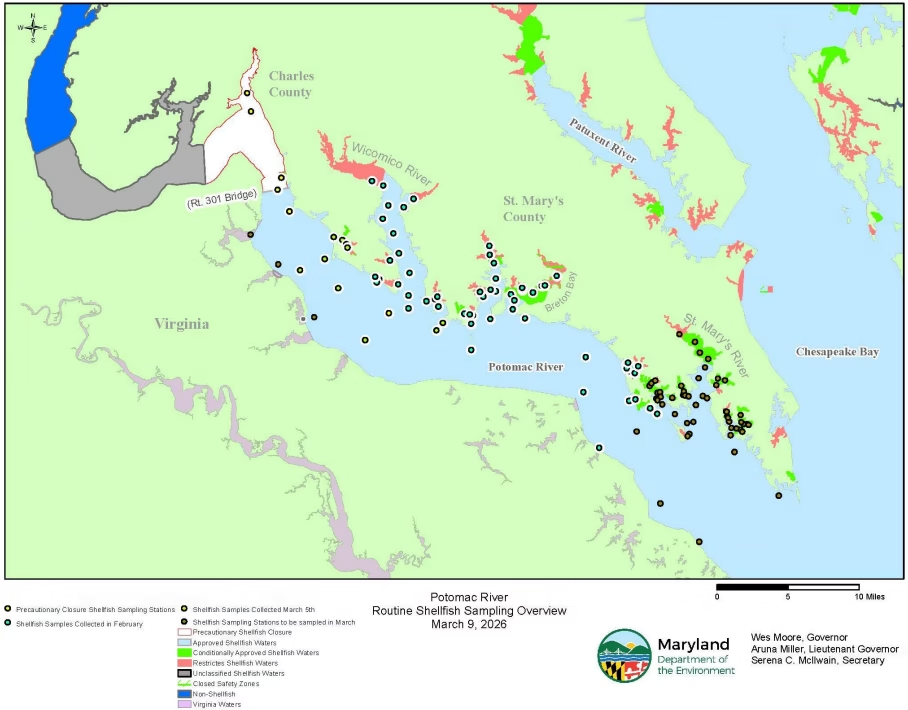
The Maryland Department of the Environment (MDE) told us they use calculations from the Food and Drug Administration to determine where to close shellfish harvesting areas, but these calculations are not available to the public. Within a week of the spill, they used these calculations in their decision to close a 60-mile portion of the Potomac River, from the Port Tobacco River region down to the U.S. Route 301 bridge, to shellfish harvesting. They also issued a non-contact health advisory advising citizens to avoid direct contact with the river, which has now ended. The shellfish closure was lifted on March 10 after fecal coliform testing revealed results that were “consistent with 40 years of routine seasonal data for this location.”
The Interstate Commission on the Potomac River Basin (ICPRB) has been modeling the spill’s path, but the model only extends about five miles downriver of the spill. Their calculations suggest that 90% of the pathogens would dissipate within ten days of the spill (see ICPRB’s presentation to the Council of Governments, which begins around minute 37:00). We reached out to ICPRB to ask that their model extend downriver to lower Potomac. They are working on it, but they say it will take some time.
We will continue advocating for a model that can predict a sewage spill’s path so that testing can be targeted. We will also continue requesting that MDE increases and expands their fecal coliform (a group of bacteria associated with fecal contamination) testing.
We’ve continued close contact with the Maryland Department of the Environment who has put out a new webpage about the spill, where they will be publishing their water quality data. They say this webpage will be more up to date than the data available on their shellfish waters map. A report from MDE on sampling stations further south of the Potomac, including two locations near St. George’s Creek, indicated fecal coliform levels were sampling within a normal threshold. To meet the national standard for shellfish harvesting, 90% of locations sampled must be at or below 49.0 most probable number (MPN) of fecal coliform (for the most recent 30 samples). The samples taken near St. Georges Creek had less than 3 MPN.
MDE reports that additional sampling, to include several locations within St. Mary’s River, will be conducted in March. We eagerly await the results for these testing locations and will continue to monitor the posted results to determine if fecal coliform bacteria levels are testing at levels safe for fishing and recreation.
We have been following up and pushing for more information from MDE as well as our State representatives to keep you informed as this progresses.
In addition to our requests for a model and increased testing, we’ve also asked for an increased response from public health agencies. Public health agencies can help interpret the water quality data collected by MDE and publicize information widely. We’ve reached out to the St. Mary’s Public Health Department to ask for an increased local public health response, and they published a website on sanitary sewer overflows on March 18.
A substantial investment in our public infrastructure is clearly needed, which we also called for in our letter. The collapsed area of the pipe is expected to be fixed by mid-March, with additional pipeline repairs taking approximately 9 months.
We still don’t know how the increased nutrients (which cause algae blooms and decrease oxygen levels), influx of heavy metals, and overall ecosystem changes from the spill will impact us downriver. As waters warm with the season change, some organisms become more active, altering how the waters and its inhabitants will be impacted by this spill.
There are contrasting views on the impact this has had and will continue to have on the environment and surrounding areas.
We will continue to follow this issue and ask for an increased public health response, more frequent sampling for fecal coliform, and an accessible model of the Potomac River that can track spills like this.